Morris & Essex Line

world.nycsubway.org · What's New · Leave Feedback

Google
Return to: Home > Around New York > New Jersey Transit
A Sample of the NJT Morris & Essex Line Images


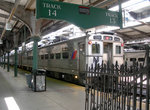
(image 69423)

Collection of: Joe Testagrose


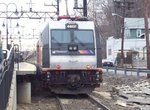
(image 83414)

Photo by: Chris Reidy


(image 49781)

Photo by: Harv Kahn


(image 20601)

Photo by: Steve Zabel


(image 20624)

Photo by: Steve Zabel


(image 81330)

Photo by: Chris Reidy


(image 20653)

Photo by: Steve Zabel


(image 78643)

Photo by: Chris Reidy


(image 78640)

Photo by: Chris Reidy


(image 43710)

Collection of: David Pirmann


More Images: 1-20 21-40 41-60 61-80 81-100 101-120 121-140 141-160 161-180 181-198
By Peggy Darlington (about) (contact)

We will begin our tour of New Jersey Transit's Morris and Essex lines at the junction with the Northeast Corridor line, known as the "Midtown Direct" connection. This connection was a major project aimed at unifying NJ Transit's heavy rail system into one unified network. Originally named the Kearny Connection, it was swiftly renamed to more properly indicate the function of the connection for marketing purposes. The trains that use the connection must be hauled by NJT's voltage ALP-44 (and soon ALP-46) locomotives, which can switch from 12,000 to 25,000 volts on the fly. The rest of the Morris & Essex is served by electric multiple unit and even diesel-hauled locomotive trains.

Trains on the Morris & Essex now have two choices of terminal: Hoboken, and New York-Penn Station, which is described on the Northeast Corridor page.

Leaving the Northeast Corridor line, the three-track main line parallels Interstate 280 on the north side and the Northeast Corridor line to the south. Crossing the Passaic River on a two-track drawbridge, we spot the Newark Bears minor league baseball team, and quickly enter Newark Broad Street (photos), which has two low side platforms and a center bypass track. There are large wooden station houses on each platform and crossunders to the main station at street level. Railings are ornate wrought iron. There is evidence of some closed exits to the street.

East Orange (photos) follows, on a viaduct. There are three tracks, with a low-level island platform serving the eastbound and center tracks and a side platform serving westbound trains. The platforms have been shortened and evidence of their former length is clearly visible at the ends of the platforms. The next station is nearly identical, Brick Church (photos).

Next up is Orange (photos), featuring two side platforms alongside three tracks. The station was moved from its original location further to the west. There is an indoor waiting area on both platforms, and the main station house is on the south side of the tracks. An extra exit to the street is located at the east end of both platforms. Highland Avenue (photos) follows, also two low wall platforms and a center bypass track.

Mountain Station (photos) is next. The platform arrangement is the same as Orange. A mission style station house is located on both platforms. The east end of the station is partially in an arched tunnel due to the street passing overhead. South Orange (photos) is next, with a low island serving the center and westbound track and a low side platform serving eastbound trains. A mission style station house is on both platforms. A sign proudly proclaims the station as the "Home of Seton Hall University."

Maplewood (photos) is next. A low island serves the center and westbound track and a low side platform serves the eastbound track. The main station house serves eastbound trains and is a nice Tudor style building. There is a crossunder and a mini-station house for westbound trains. A maple leaf pattern is located on the walls of the crossunder to the island platform.

The line becomes two tracks and we continue our ride. Millburn (photos) is next with two low wall platforms. The current station house is on the south side. This is a modern building with marble walls, lots of glass and a 45-degree angle glass skylight. An old station house on the north side has been converted to a private law office. Short Hills (photos) follows, with two low side platforms. The north side had a station house, which is now the home of the Short Hills Historical Society.

Summit (photos) is next, and is the first station along the line to feature high platforms. An island serves the eastbound and and center track and a wall platform serves westbound trains. This nice station is in a cut with concrete sidewalls. There is a station house and crossover over the tracks and is A.D.A.-compliant. This station serves as the terminal of some local trains from Hoboken, as well as non-through service from the Gladstone branch.

Chatham (photos) is next. This station is on an embankment and has two low wall platforms. Station houses are on both platforms but the north side house is closed. Madison (photos) follows, raised on a viaduct through town. There are two low platforms with stone station houses on both platforms. The eastbound side has an extra closed station house. Side rails of the platforms are concrete, as are the canopies.

Convent Station (photos) follows and is located at a grade crossing with two low platforms. The station has a station house on each platform with the north side being closed. A sign proclaims the station as "Home of the College of Saint Elizabeth." The college can be seen just to the north and east of the station. There are a few more grade crossings immediately to the west of Convent Station.

Morristown (photos) is next and we return to grade separation via embankment over the street. There are closed station houses on both low wall platforms. There is a crossunder as well as a ramp to the parking area to the south of the eastbound platform. Morris Plains (photos) is next, grade separated with two low wall platforms. An old station house to the west of the station on the south side is now a model railroad club. This station has a crossunder and a mini-high platform on the east end.

Mount Tabor (photos) follows, with two low side platforms that are very short. There is a grade crossing on both sides of the station, and stopping trains will block the crossing. Not all trains serve this little station.

Denville (photos) follows. This station has two low side platforms with mini-high platforms on the east end. Denville is also served by Boonton line trains which connect via a single track line from the northeast. Those trains stop at a has a separate high platform adjacent to that track.

We arrive at Dover (photos) after a local-stops ride of almost ninety minutes. Recently rebuilt, Dover has two tracks and a high center island platform. The station formerly had three tracks and a low platform on the north side only. A grade crossing is west of the station, which has two tracks and a high island platform. Electric trains from Hoboken and New York must terminate here, however the diesel Boonton line trains continue to Hackettstown. A storage yard for electric trains is to the east of the station on the south side.

http://www.nycsubway.org/us/njtransit/morris.html
Copyright © 1995-2005 www.nycsubway.org.
This site is not affiliated with any transit agency or provider.