
The Manhattan Elevated Fleet
Roster
Description
What is an "MUDC" car? The "MUDC" (Multiple-Unit Door Control) cars were conversions from the "gate car" style, where the cars had open plaforms at each end instead of enclosed vestibles. The gates were manually operated by a conductor on each platform. To improve safety and reduce staffing, the IRT selected 470 gate cars in 1923 and 1924, and rebuilt them with enclosed vestibules and sliding, remotely-operated doors, reducing the number of conductors required to one per train. These trains operated the Manhattan elevated lines beginning in 1923 with the last ones retired in 1957, where they were operating the Bronx portion of the 3rd Avenue El. No cars of this type are preserved.
Electric Railway Journal · Vol. 62, No. 20.
A demonstration run with a train of four reconstructed Manhattan elevated cars was given on the Second Avenue line in New York on Nov. 7 (1923), as mentioned in the news colums of this paper in the issue of Nov. 10. The reconstructed cars have vestibuled platforms, with sliding doors in place of the old platform gates and railings. The sliding doors are of sheet steel construction with two panels, one with glass and the other closed. The doors slide on the outside of the car. This construction is of particular advantage as a pocket does not have to be provided inside, which would otherwise disturb the interior equipment. The motorman's operating cab is still retained in its original position just back of the platform.
The sliding doors are electro-pneumatically operated by door engines installed under the longitudinal seats at the ends of the car. The control of these door engines is by control switches installed on the ends of the car. The operator's station is on two elevated footrests between the two cars. By having a train line control cable, multiple operation of the doors is provided, so that one operator can control the doors on as many cars as found advisable. Cut-out switches for the door control lines are installed inside the cars, so that the control connections can be dead-ended at the operator's station or connected through to the next car as desired. Indicating signal lamps are installed at the center of each car on the outside. The circuit for these signal lights passes through both the door contacts and the door-locking contacts, so that it is necessary to have the doors both closed and locked before the lights are extinguished to indicate that the train is ready to start. The motorman's cab is also equipped with a starting signal, which lights when all doors are properly closed and locked. The locking of the doors is accomplished by a small projecting stirrup, which is pulled in when the doors are unlocked and is extended for the locking position.
Provision is made for the emergency opening of doors by a glass-inclosed mechanism at each end of the car. The glass is lettered "To Open Door in Emergency, Break Glass and Pull Weight." The pulling of the weight raises the operating arm of the door engine beyond its center so that the door can be readily pushed back. Similar emergency operating equipment is provided on the outside of the cars as well. These are intended for use of platform attendants and hooks for the emergency operation are kept at each station. The first test train had ventilators installed on the roof over the vestibule portions of the car. It has not been definitely decided whether all future cars will be so equipped or not. The cars remodeled have been thoroughly overhauled and painted and varnished on the outside with the new standard color goldenrod orange. The inside has also been renovated and painted. The lower woodwork is finished in mahogany and the ceilings in white enamel to improve the lighting conditions.
Related Documents
They Moved the Millions, Chapter 1, The Elevated Lines, a more extensive description of the Manhattan El fleet, from Ed Davis's They Moved the Millions.
A Brief History of Standard Manhattan Elevated Cars, and a a more detailed roster than the summary above, by George Chiasson, Jr.
Photo Gallery
| Five Random Images | ||||
 Image 27914 (407k, 1024x682) Collection of: David Pirmann Location: 239th Street Yard | 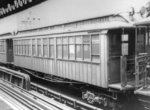 Image 41791 (214k, 1024x683) Photo by: Robert C. Marcus Collection of: Victor Rucklin/Ed Davis Sr. | 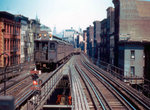 Image 75726 (240k, 1044x701) Photo by: Frank Pfuhler Location: Canal Street |  Image 75937 (47k, 688x553) Photo by: Frank Pfuhler Location: East 180th Street | 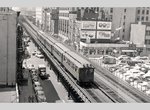 Image 132310 (281k, 1024x586) Photo by: Ed Watson/Arthur Lonto Collection Collection of: Frank Pfuhler Location: 47th Street |
Car Notes
| Green | Preserved, saved for preservation, or exists in some state |
Yellow | Converted to work service (and later scrapped or still in use) |
Red | Wrecked/Damaged in accident (and possibly repaired), or scrapped prior to the bulk of the type |
| Number | Notes | |||||
|---|---|---|---|---|---|---|
| G | Manhattan El revenue collection car "G" is at the Shore Line Trolley Museum. It was on temporary loan to the New York Transit Museum in 2000.
| |||||
| 782 | Was at Knox & Kane Railroad, Marienville, PA. (Stored inoperable.) | |||||
| 824 | Motorman Instruction Car. Now at Shore Line Trolley Museum.
| |||||
| 844, 889 | Used at the Richmond Shipyard Railway (California) 1943-1945, where they were renumbered 561, 563 respectively. Now at the Western Railway Museum, Rio Vista, California. In 2014, car 563 was repainted to Shipyard Railway WWII colors.
|


| ||||||||||||||||||||||