| Number
|
Notes
|
| ....
|
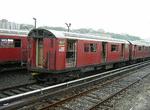
Cars 5709, 5710, 5711, 5712 converted to station wash train.

Image 12976
(190k, 1024x681)
Collection of: Joe Testagrose
Location: Coney Island Yard
| 
Image 12977
(143k, 1024x682)
Photo by: Steve Zabel
Collection of: Joe Testagrose
Location: Fordham Road
| 
Image 12978
(149k, 1024x666)
Photo by: Steve Zabel
Collection of: Joe Testagrose
Location: Coney Island Yard
| | |
|
| ....
|
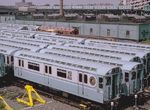
5812, 5823, 5831, 5833, 5842, 5843, 5844, 5857, 5861, 5875, 5877, 5895, 5950, 5965, 5984, 5985, 5989, 6214, 6762, 7234, 7241, 7269, 7287, 7318, 7319, 7322, 7327, 7338, 7380, 7397, 7436, 7472, 7502, 7515, 7518, 7522, 7608, 7633 converted to Rider Cars. See R-71 Rider Cars for details.

Image 7255
(64k, 800x600)
Photo by: Jeff Erlitz
Location: Westchester Yard
| 
Image 7259
(54k, 800x600)
Photo by: Jeff Erlitz
Location: 36th-38th Street Yard
| 
Image 7665
(230k, 1044x742)
Photo by: Mark S. Feinman
Location: 36th-38th Street Yard
| 
Image 28581
(172k, 1044x701)
Photo by: David Pirmann
Location: Coney Island Yard
| 
Image 70669
(199k, 1024x682)
Photo by: Doug Grotjahn
Collection of: Joe Testagrose
Location: 40th Street/Lowery Street
| | | | | | |
|
| ....
|
Cars 6721, 6726, 6813, 6850, 7055, 7077, 7083, 7100, 7133, 7136, 7145, 7168, 7210, 7211, 7243, 7278, 7289, 7296, 7303, 7340, 7345, 7446, 7505, 7550, 7568, 7569, 7579, 7588, 7657, 7659, 7691, 7701 converted to Continuous Welded Rail Handlers. See R-123 Continuous Welded Rail Cars for details.

Image 70002
(334k, 1044x788)
Photo by: Michael Hodurski
Location: Bay Parkway (22nd Avenue)
| 
Image 70003
(319k, 1044x788)
Photo by: Michael Hodurski
Location: Bay Parkway (22nd Avenue)
| 
Image 83293
(262k, 1044x699)
Photo by: Michael Hodurski
Location: Coney Island Yard
| 
Image 89029
(338k, 1044x788)
Photo by: Zach Summer
Location: Avenue U
| 
Image 117239
(80k, 1024x683)
Photo by: Michael Pompili
Location: Yard/Shops
| | | | | | |
|
| ....
|
Cars 6835, 6899, 7121, 7346, 7376, 7413, 7432, 7571, 7629 converted to Pump/Reach Cars. See R-71 Reach Cars for details.

Image 7247
(40k, 800x600)
Photo by: Jeff Erlitz
Location: 36th-38th Street Yard
| 
Image 43684
(126k, 1044x700)
Photo by: J. Dresner
Location: 207th Street Yard
| 
Image 76061
(288k, 1044x788)
Photo by: Glenn L. Rowe
Location: 207th Street Yard
| 
Image 133087
(311k, 1024x675)
Photo by: John Dooley
Location: Jamaica Yard/Shops
| 
Image 133289
(302k, 1024x680)
Photo by: John Dooley
Location: 36th-38th Street Yard
| | | | | | |
|
| ....
|
Cars 7183, 7187, 7203, 7208, 7224, 7246, 7261, 7358, 7408, 7420, 7450, 7460, 7475, 7486 (and possibly others) converted to Garbage Motors (G prefix to carnumber).

Image 38107
(507k, 1200x800)
Photo by: David Boone
Collection of: David Pirmann
Location: 207th Street Yard
| 
Image 38108
(514k, 1200x800)
Photo by: David Boone
Collection of: David Pirmann
Location: 207th Street Yard
| 
Image 38111
(549k, 1200x800)
Photo by: David Boone
Collection of: David Pirmann
Location: 207th Street Yard
| | |
|
| ....
|
Cars 7194, 7313, 7337, 7343, 7355, 7368, 7379, 7389, 7392, 7490 converted to Revenue Collector cars; cars 7314, 7374, 7386, 7410, 7422, 7424, 7444, 7449, 7459, 7496 converted to Locker Cars (1R714-1R723) and paired with the corresponding car 0R714-0R723. See R-95 Revenue Collector Cars for details.

Image 75364
(164k, 1044x788)
Photo by: Anthony Maimone
Location: New York Transit Museum
| 
Image 77565
(28k, 600x450)
Photo by: Professor J
Location: New York Transit Museum
| 
Image 79620
(115k, 820x620)
Photo by: Gary Chatterton
Location: New York Transit Museum
| 
Image 100783
(273k, 1044x788)
Photo by: Zach Summer
Location: New York Transit Museum
| 
Image 100784
(302k, 1044x788)
Photo by: Zach Summer
Location: New York Transit Museum
| | | | | | |
|
| ....
|
Cars 8816, 8817, 8820, 8821, 8858, 8859, 8862, 8863, 8868, 8869, 8878, 8879, 8890, 8891, 8892, 8893, 8914, 8915, 8936, 8937, 8950, 8951, 8954, 8955, 8956, 8957, 8964, 8965, 8986, 8987, 9020, 9021, 9032, 9033, 9038, 9039, 9066, 9067, 9070, 9071, 9138, 9139 converted to Rider Cars. See R-161 Rider Cars for details.
|
| 5703-5706
|
5703 used as revenue collection car 1950-1964. 5703-5706 modified in 1964 for use on Bowling Green-South Ferry inner loop shuttle service. All scrapped.

Image 2648
(203k, 1024x680)
Photo by: Doug Grotjahn
Collection of: Joe Testagrose
Location: Bowling Green
| 
Image 2649
(514k, 1200x800)
Collection of: David Pirmann
Location: Corona Yard
| 
Image 2651
(168k, 1024x677)
Photo by: Doug Grotjahn
Collection of: Joe Testagrose
Location: Bowling Green
| | |
|
| 5708
|
Converted to revenue collection car R707. Scrapped.

Image 7248
(79k, 800x516)
Photo by: Harold
Collection of: Joe Testagrose
Location: Concourse Yard
| | | | |
|
| 5714
|
Converted to work motor E45; since scrapped.

Image 2746
(237k, 1024x682)
Photo by: Doug Grotjahn
Collection of: Joe Testagrose
Location: 36th-38th Street Yard
| 
Image 2747
(188k, 1024x670)
Photo by: Steve Zabel
Collection of: Joe Testagrose
Location: 149th Street
| | | |
|
| 5756
|
Converted to Weld Car W-303. Scrapped.
|
| 5760
|
New York Transit Museum collection. Restored to operable status and used on several fan trips beginning in 2003.

Image 2749
(539k, 1200x800)
Photo by: Steve Hoskins
Collection of: David Pirmann
Location: New York Transit Museum
| 
Image 26545
(140k, 1044x784)
Photo by: David Pirmann
Location: Court House Square/45th Road
| | | |
|
| 5767
|
Converted to revenue collector car 0R-711. Scrapped.
|
| 5781
|
Converted in 1973 to IRT 75-foot test car XC875. Used for clearance testing around the IRT to test the feasability of ordering longer cars for the IRT division. Scrapped.

Image 12998
(229k, 1024x678)
Photo by: Steve Zabel
Collection of: Joe Testagrose
Location: 207th Street Yard
| | | | |
|
| 5782
|
Survives, last seen at 207th Street Yard in MTA blue/silver livery. Mechanical condition unknown.

Image 2730
(166k, 1044x695)
Photo by: David Pirmann
Location: Westchester Yard
| | | | |
|
| 5784
|
Derailed outside of Wall Street on #2, (1969?). Scrapped.

Image 12248
(233k, 1024x697)
Photo by: Steve Zabel
Collection of: Joe Testagrose
Location: 207th Street Yard
| 
Image 12249
(219k, 1024x668)
Photo by: Steve Zabel
Collection of: Joe Testagrose
Location: 207th Street Yard
| | | |
|
| 5815
|
Derailed near 180th St., 12/29/1969. Removed by crane on Bronx River Parkway; cut in two for removal.

Image 2780
(226k, 1024x676)
Photo by: Steve Zabel
Collection of: Joe Testagrose
Location: East 180th Street Yard
| 
Image 2781
(199k, 1024x674)
Photo by: Steve Zabel
Collection of: Joe Testagrose
Location: East 180th Street Yard
| 
Image 2782
(236k, 1024x678)
Photo by: Steve Zabel
Collection of: Joe Testagrose
Location: East 180th Street Yard
| | |
|
| 5871, 5872
|
5871 and 5872 were used as fire department training cars. 5871 to be preserved for the New York Transit Museum. 5872 was scrapped.

Image 2819
(524k, 1200x794)
Photo by: Houser Collection
Collection of: David Pirmann
Location: Coney Island Yard
| | | | |
|
| 6216-6225
|
First IRT cars delivered with public address system, 1950.
|
| 6239
|
New York Transit Museum collection. This car was used to test an early air conditioning system. Restored to operable status and used on several fan trips beginning in 2003.

Image 2916
(165k, 1044x788)
Photo by: David Pirmann
Location: New York Transit Museum
| 
Image 26544
(112k, 1044x784)
Photo by: David Pirmann
Location: Court House Square/45th Road
| | | |
|
| 6595, 6597, 6601, 7740, 7509, 7513, 7516
|
4/21/1946: 6595, 6597, 6601, 7740, destroyed in Grand Central shuttle fire. 7509, 7513, 7516 were the automated "SAM" test train used on the IRT Times Square-Grand Central Shuttle; cars were not harmed by fire but were never returned to revenue service. 7513 scrapped 7/1967. 7509 became XC375 (see below).

Image 8182
(293k, 1200x800)
Collection of: David Pirmann
Location: Grand Central
| | | | |
|
| 6609
|
New York Transit Museum collection. Restored to operable status and used on several fan trips beginning in 2003.

Image 3217
(133k, 1044x788)
Photo by: David Pirmann
Location: New York Transit Museum
| 
Image 26549
(136k, 820x620)
Photo by: Glenn L. Rowe
Location: Corona Yard
| | | |
|
| 6673, 6786
|
8/29/1957, accident, no other info available.
|
| 6688
|
Shore Line Trolley Museum collection. Operable, recently repainted.
|
| 6895
|
Still on the property as of 6/2014. Last seen at Concourse Yard.

Image 3201
(68k, 801x528)
Photo by: Glenn L. Rowe
Location: Concourse Yard
| 
Image 3202
(125k, 800x600)
Photo by: Constantine Steffan
Location: Westchester Yard
| | | |
|
| 7161, 7675, 7589
|
Wrecked in derailment at Utica Ave. portal, 7/3/1981.
|
| 7190
|
Derailed & hit ceiling near Times Square (1980s).
|
| 7194 (0R714), 7424 (0R715)
|
Possibly New York Transit Museum collection, was on display in the museum in 2007 and again 2011. Present status unknown.

Image 75365
(158k, 1044x788)
Photo by: Anthony Maimone
Location: New York Transit Museum
| 
Image 130446
(353k, 1044x701)
Photo by: John Dooley
Location: New York Transit Museum
| | | |
|
| 7196, 7216, 7425
|
Converted to work car.

Image 38110
(514k, 1200x800)
Photo by: David Boone
Collection of: David Pirmann
Location: 207th Street Yard
|
Image 38111
(549k, 1200x800)
Photo by: David Boone
Collection of: David Pirmann
Location: 207th Street Yard
| | | |
|
| 7261
|
Converted to Garbage Motor (G prefix to carnumber). Last used at Corona Yard for storage; was scrapped in 2002.
Image 38111
(549k, 1200x800)
Photo by: David Boone
Collection of: David Pirmann
Location: 207th Street Yard
| 
Image 40728
(104k, 960x640)
Photo by: Michael Pompili
Location: SBK Yard (2nd Ave at 38th St.) (SBK)
| 
Image 40730
(95k, 960x640)
Photo by: Michael Pompili
Location: SBK Yard (2nd Ave at 38th St.) (SBK)
| | |
|
| 7366
|
Converted to work car 37366. Was used for the Signal Dolly Work Train and scrapped in 2002.

Image 3284
(78k, 640x480)
Collection of: David Justiniano
Location: SBK Yard (2nd Ave at 38th St.) (SBK)
| | | | |
|
| 7371
|
Converted to signal dolly/rider car 37371. Selected for decommissioning in 2004, this car was first displayed in the New York Transit Museum as a temporary installation while the IRT SMEE museum cars were being used on various fan trips; it was then used on a fan trip itself in May 2005 along with R-33 9327; then both were shipped in June 2005 to the Seashore Trolley Museum.

Image 18007
(278k, 800x561)
Photo by: Gary Chatterton
Location: Gun Hill Road
| 
Image 30354
(68k, 600x450)
Photo by: Trevor Logan
Location: New York Transit Museum
| 
Image 30359
(75k, 600x450)
Photo by: Trevor Logan
Location: New York Transit Museum
| 
Image 39222
(178k, 1024x768)
Photo by: Todd Glickman
| |
|
| 7509
|
Converted in 1973 to IRT 64-foot test car XC375. Scrapped 7/12/1996. From the April, 1982, Bulletin of the New York Division Electric Railroader's Association: On April 1st, a clearance test train left Mosholu Yard at 6:00 pm and operated over various IRT lines. The train was composed of three motors, car 8776, XC 375, 8777 and three more motor cars. The motor cars were single unit R-17, R-21 or R-22 cars.

Image 70673
(192k, 1024x668)
Photo by: Steve Zabel
Collection of: Joe Testagrose
Location: 207th Street Yard
| | | | |
|
| 7602
|
Accident at Morris Park Ave., 11/24/1979.

Image 3347
(255k, 1024x679)
Photo by: Steve Zabel
Collection of: Joe Testagrose
Location: Morris Park
| 
Image 3348
(232k, 1024x687)
Photo by: Steve Zabel
Collection of: Joe Testagrose
Location: Morris Park
| | | |
|
| 7774-7775
|
Stored at Unionport Yard, present status unknown.

Image 131385
(405k, 1024x672)
Photo by: John Dooley
Location: Unionport Yard
| 
Image 131386
(315k, 1024x657)
Photo by: John Dooley
Location: Unionport Yard
| | | |
|
| 7888-7889, 8696-8697
|
4/12/2000: Derailed north of 59th Street, repaired and returned to service. 7888-7889 scrapped in July 2002, 8696-8697 scrapped in December 2001.
|
| 7924-7925
|
This pair of cars retained its original windows, instead of the ones installed during the early 1990's rebuild project. Possibly used as rail adhesion gel train? Still on the property as of 6/2014. Last seen at Concourse Yard.

Image 144227
(393k, 1024x668)
Photo by: John Dooley
Location: Concourse Yard
| 
Image 144421
(666k, 820x1220)
Photo by: David Pirmann
| | | |
|
| 7926-7927
|
At Illinois Railway Museum, outside Chicago. Arrived at IRM on 7/19/2007. Before this date, the cars sat idle on NYCT property for almost three years. The cars experienced some grafitti and some paint chipping, revealing a possible all-white scheme. They were taken to Illinois by freight rail.

Image 12161
(107k, 820x551)
Photo by: J. Dresner
Location: Cross Harbor Yard - 1st Ave & 44th (BTRR)
| 
Image 12162
(102k, 820x551)
Photo by: J. Dresner
Location: Cross Harbor Yard - 1st Ave & 44th (BTRR)
| | | |
|
| 8678-8679
|
Possibly used as rail adhesion gel train? Still on the property as of 6/2014. Last seen at Concourse Yard.

Image 144228
(453k, 1024x747)
Photo by: John Dooley
Location: Concourse Yard
| | | | |
|
| 8686-8687
|
Had experimental lightweight trucks for a period in the 1960s.
|
| 8706
|
8/26/1996: Derailed on switch 11, 239th St. Yard (8th car in consist of 20); minor damage sustained. Repaired and returned to service. Scrapped in July 2001.
|
| 8812-8813
|
Assigned to work service (36th St. Yard). Scrapped 2013.

Image 95069
(281k, 1044x788)
Photo by: John Barnes
Location: 71st/Continental Aves./Forest Hills
| 
Image 141247
(345k, 1044x1002)
Photo by: Kevin Wong
Location: Sims Metal, Newark NJ
| | | |
|
| 8816-8817
|
In June 2003, cars 8816-17 and 9020-21 were used as revenue cars for the Concourse and 8th Avenue lines and for a brief time on the Queens Boulevard lines. These cars operated with R-22 Revenue Cars and were renumbered 18816-17, 19020-21. They were taken out of revenue collection service in Fall 2004 and were then converted to work cars RD413 and RD412 respectively.
|
| 8832-8833, 8912-8913, 8980-8981, 9152-9153, 9154-9155
|
2/3/1998: 239th Street Yard lead accident. 8832-8833, 8912-8913, 9154-9155 back in service as of 12/17/1998. 8980-8981, derailed; 8980 scrapped in 2000, 8981 mated with 9152 9152-9153 derailed and burned; scrapped in 2000.

Image 6195
(185k, 1044x703)
Photo by: David Pirmann
Location: 239th Street Yard
| 
Image 6196
(185k, 1044x711)
Photo by: David Pirmann
Location: 239th Street Yard
| 
Image 27089
(42k, 714x441)
Photo by: Glenn L. Rowe
Location: 239th Street Yard
| 
Image 27090
(54k, 820x553)
Photo by: Glenn L. Rowe
Location: 239th Street Yard
| 
Image 27091
(55k, 819x558)
Photo by: Glenn L. Rowe
Location: 239th Street Yard
| | | | | | |
|
| 8834-8835
|
Assigned to work service (Coney Island Yard).
|
| 8884
|
7/15/1997: Derailed, scrapped on site at Rogers Junction.
|
| 8885
|
Mate of 8884 now in work service as rail adhesion train.

Image 7218
(87k, 800x600)
Photo by: Constantine Steffan
Location: Westchester Yard
| 
Image 7239
(80k, 800x600)
Photo by: Constantine Steffan
Location: Westchester Yard
| 
Image 160439
(340k, 920x1220)
Photo by: John Dooley
Location: Pelham Parkway
| | |
|
| 8888-8889
|
Assigned to work service (Westchester Yard).
|
| 8912-8913
|
In the summer of 2004, cars 8912-13 were taken the Tiffany Street Iron Shops, a training and fabrication facility for el structure maintainers, in the Hunts Point section of the Bronx. They are part of a elevated structure mock-up that stretches about 180 feet, with station and platform included.

Image 37917
(120k, 1044x700)
Photo by: Mark W.
Location: MTA Tiffany Iron Works/The Bronx
| 
Image 37918
(131k, 1044x700)
Photo by: Mark W.
Location: MTA Tiffany Iron Works/The Bronx
| | | |
|
| 8942-8943, 9015, 9063, 9064, 9065, 9130, 9154-9155, 9225
|
7/21/1998: Collision 105th & B'way. Collision on southbound track. 8943, 9064 pushed out of center castings; back in service by 10/23/1998. 9063, 9105, 9130, 9154-9155, 9180-9181, 9225 sustained coupler and anticlimber damage; back in service as of 9/1/1998. 9065 sustained drawbar damage; back in service as of 9/1/1998.
|
| 8968-8969
|
Caught fire (Accident at Utica Ave. portal?) (1980s)
|
| 8996-8997
|
Converted to refuse motors based at 36th St Yard.

Image 131214
(318k, 681x1024)
Photo by: John Dooley
Location: 239th Street Yard
| | | | |
|
| 9000-9001
|
Severe fire damage at Borough Hall in the 1980s. Floor was replaced, and cars were returned to service. They survived to go through the GOH program. Later converted to refuse motors based at 36th St Yard.

Image 131225
(295k, 1024x589)
Photo by: John Dooley
Location: 239th Street Yard
| | | | |
|
| 9010-9011
|
New York Transit Museum collection. Part of "Train of Many Colors" fleet. Carries "MTA" silver and blue livery.

Image 28953
(157k, 1044x751)
Photo by: David Pirmann
Location: Zerega Avenue
| 
Image 28954
(183k, 1044x735)
Photo by: David Pirmann
Location: Zerega Avenue
| 
Image 29337
(114k, 950x756)
Photo by: David of Broadway
Location: 238th Street
| | |
|
| 9016-9017
|
New York Transit Museum collection. Part of "Train of Many Colors" fleet. Carries bright red with yellow trim livery.

Image 28952
(141k, 1044x701)
Photo by: David Pirmann
Location: Zerega Avenue
| 
Image 31979
(459k, 1220x920)
Photo by: Richard Panse
Location: Beach 98th Street/Playland
| 
Image 37711
(143k, 1044x788)
Photo by: Richard Panse
Location: 238th Street (Nereid Avenue)
| | |
|
| 9018-9019
|
Were converted to Signal Dolly service but were scrapped 8/2003.

Image 26252
(157k, 1024x768)
Photo by: Glenn L. Rowe
Location: 207th Street Yard
| | | | |
|
| 9056
|
Transported to Washington, D.C. for 2001 Smithsonian Folklife Festival. Scrapped afterward.

Image 88437
(146k, 1044x693)
Photo by: Chao-Hwa Chen
Location: Smithsonian Folklife Festival, The Mall, Washington, D.C.
| 
Image 88438
(132k, 1044x692)
Photo by: Chao-Hwa Chen
Location: Smithsonian Folklife Festival, The Mall, Washington, D.C.
| | | |
|
| 9068-9069
|
New York Transit Museum collection. Part of "Train of Many Colors" fleet. 9068 carries kale green with silver roof livery; 9069 in redbird red livery.

Image 3906
(111k, 1044x788)
Photo by: David Pirmann
Location: West Farms Sq./East Tremont Ave./177th St.
| 
Image 30763
(70k, 800x561)
Photo by: Gary Chatterton
Location: New York Transit Museum
| 
Image 37617
(181k, 900x598)
Photo by: Fred Guenther
Location: Bronx Park East
| | |
|
| 9075
|
9075 was on display outside Queens Borough Hall beginning January 2005. In July 2022 it was sold at auction to a private collector in Los Angeles for $235,700, the car was removed from the QBH property October 16, 2022. (NY Times article.)

Image 36566
(272k, 795x556)
Photo by: Gary Chatterton
Location: Queens Borough Hall
| 
Image 36568
(246k, 795x556)
Photo by: Gary Chatterton
Location: Queens Borough Hall
| 
Image 160116
(601k, 1220x920)
Photo by: Chris Crayon
Location: Queens Borough Hall
| | |
|
| 9108
|
Caught fire, repaired and returned to service (1993). Scrapped with rest of fleet in 2003.
|
| 9114
|
Caught fire, repaired and returned to service (late 1960s). Scrapped with rest of fleet in 2003.
|
| 9156-9157
|
Sent to NYC Emergency Services training school at Floyd Bennett Field.

Image 37736
(35k, 480x319)
Photo by: J. Dresner
Location: NYPD Emergency Services training facility, Floyd Bennett Field
| 
Image 37737
(34k, 480x319)
Photo by: J. Dresner
Location: NYPD Emergency Services training facility, Floyd Bennett Field
| 
Image 37738
(92k, 820x551)
Photo by: J. Dresner
Location: NYPD Emergency Services training facility, Floyd Bennett Field
| | |
|
| 9203, 9224
|
10/25/1973: Fire in master controller unit of 9203, in Pelham line tunnel near Longwood Avenue station. Fire also affected car 9224 which had a large floor section cut out during firefighting (it was subsequently scrapped). The following train ended up rear-ending the disabled train due to low visibility caused by the smoky fire.

Image 12893
(233k, 1024x678)
Photo by: Ed McKernan
Collection of: Joe Testagrose
Location: Scrapyard
| | | | |
|
| 9206-9207
|
New York Transit Museum collection. Part of "Train of Many Colors" fleet. Carries "MTA" silver and blue livery.

Image 33993
(193k, 1044x701)
Photo by: David Pirmann
Location: Neck Road
| 
Image 34003
(182k, 1044x724)
Photo by: David Pirmann
Location: Sheepshead Bay
| | | |
|
| 9213
|
Caught fire, late 1960s.
|
| 9294-9295
|
First IRT cars retrofitted with air conditioning, placed in service 9/5/1973.
|
| 9306
|
New York Transit Museum collection. Part of "Train of Many Colors" fleet. Carries original World's Fair livery. Residing in the Transit Museum since it opened in 1976, this car was restored to operable status and used on several fan trips beginning in 2003.

Image 4427
(128k, 1044x788)
Photo by: David Pirmann
Location: New York Transit Museum
| 
Image 26484
(208k, 1044x701)
Photo by: David Pirmann
Location: 33rd Street/Rawson Street
| 
Image 26542
(197k, 1044x755)
Photo by: David Pirmann
Location: Queensborough Plaza
| | |
|
| 9307-9345
|
Most cars of the R-33 World's Fair fleet converted to work service after retirement in 2001. Most cars were renumbered, with a "1" placed next to the car number plates. For example, car 9335 is now 19335. Many of these were scrapped in 2013.

Image 160438
(336k, 920x1219)
Photo by: John Dooley
Location: Morris Park
| | | | |
|
| 9307
|
New York Transit Museum collection. Part of "Train of Many Colors" fleet. Repainted in August 2017 into replica World's Fair livery. Operated Nostalgia Train excursion on 8/19/2017.

Image 147663
(386k, 1044x702)
Photo by: Michael Hodurski
Location: Willets Point/Mets (fmr. Shea Stadium)
| 
Image 147665
(214k, 1044x596)
Photo by: Michael Hodurski
Location: Corona Yard
| 
Image 147666
(261k, 1044x596)
Photo by: Michael Hodurski
Location: Corona Yard
| | |
|
| 9308
|
New York Transit Museum collection. Repainted in Summer 2019 into replica World's Fair livery.
|
| 9310
|
New York Transit Museum collection. Part of "Train of Many Colors" fleet. Carries redbird red livery. Operated Nostalgia Train excursion on 8/19/2017.

Image 147670
(224k, 1044x686)
Photo by: Kevin Wong
Location: 34th Street-Hudson Yards
| 
Image 147675
(215k, 1044x601)
Photo by: Kevin Wong
Location: 52nd Street/Lincoln Avenue
| | | |
|
| 9321
|
The only one of the R-33 World's Fair fleet to be reefed during the Redbird reefing program, in the summer of 2001.

Image 31311
(13k, 450x292)
Location: Delaware Reef Site, 10 miles off Cape May, NJ
| | | | |
|
| 9327
|
After the final run of the Redbirds, this car was first displayed in the New York Transit Museum as a temporary installation while the IRT SMEE museum cars were being used on various fan trips; it was then used on a fan trip itself in May 2005 along with R-22 work car 7371; then both were shipped in June 2005 to the Seashore Trolley Museum. 9327 was one of the "Subway Series" cars, decorated with New York Yankees and New York Mets' logos for the 2000 World Series.

Image 4054
(60k, 640x480)
Photo by: Salaam Allah
Location: Corona Yard
| 
Image 18021
(88k, 800x540)
Photo by: Gary Chatterton
Location: 207th Street
| 
Image 30357
(71k, 600x450)
Photo by: Trevor Logan
Location: New York Transit Museum
| 
Image 39219
(113k, 1024x768)
Photo by: Todd Glickman
| |
|
| 9343
|
New York Transit Museum collection.
|
| 9349, 9410
|
Taken out of service due to anticlimber damage; mates 9411 and 9348 temporarily mated and used in service; 9349, 9410 repaired and remated to original mates in 2/2000.

Image 4075
(103k, 760x514)
Photo by: Paul Polischuk
Location: Corona Yard
| 
Image 4127
(129k, 600x400)
Photo by: Sidney Keyles
Location: Coney Island Shop/Overhaul & Repair Shop
| | | |
|
| 9400-9401
|
Remained on the property from 2004 to 2013, never used for anything. Scrapped October 2013.
|
| 9440
|
Rhode Island car.

Image 4156
(470k, 1200x800)
Collection of: David Pirmann
Location: Court House Square/45th Road
| | | | |
|
| 9542-9543
|
In 2004, these cars were on display in the New York Transit Museum. Used on Transit Museum nostalgia train service in November 2023.

Image 30358
(70k, 600x450)
Photo by: Trevor Logan
Location: New York Transit Museum
| 
Image 30494
(105k, 820x620)
Photo by: Frank Hicks
Location: New York Transit Museum
| 
Image 161261
(203k, 1220x793)
Photo by: Kevin Wong
Location: Bronx Park East
| 
Image 161262
(192k, 1220x696)
Photo by: Kevin Wong
Location: Bronx Park East
| |
|
| 9564-9565
|
These cars, the easternmost pair of Redbirds on the final revenue run on 11/3/2003 (see above), were finally moved to the SBK yard in Brooklyn for asbestos abatement and scrapping in July 2007.
|
| 9582-9583
|
Stored at Unionport Yard, present status unknown.

Image 131752
(308k, 1024x768)
Photo by: Wilfredo Castillo
Location: Unionport Yard
| 
Image 137874
(292k, 1024x447)
Photo by: John Dooley
Location: Unionport Yard
| | | |
|
| 9584-9585
|
Stored at Unionport Yard, present status unknown.

Image 131753
(309k, 1024x768)
Photo by: Wilfredo Castillo
Location: Unionport Yard
| 
Image 131754
(248k, 1024x768)
Photo by: Wilfredo Castillo
Location: Unionport Yard
| | | |
|
| 9586-9587
|
These cars were used on the final revenue run of the redbird fleet on 11/3/2003. After, they were used in work service as part of the rail adhesion train with R-33 8885. New York Transit Museum collection. Part of the "Train of Many Colors" fleet. Carries redbird red livery.

Image 143145
(348k, 785x1044)
Photo by: Omar Pagan
Location: New York Transit Museum
| 
Image 143148
(280k, 1044x785)
Photo by: Omar Pagan
Location: New York Transit Museum
| | | |
|
| 9588-9589
|
These cars, used on the final revenue run of the redbird fleet on 11/3/2003, are stored at 207th St. Yard (as of 10/2007), status unknown.
|
| 9658
|
Neighborhood Youth Corps car.

Image 42118
(143k, 1024x679)
Collection of: Joe Testagrose
Location: 52nd Street/Lincoln Avenue
| | | | |
|
| 9744
|
State of Missouri car.

Image 4385
(232k, 1024x699)
Photo by: Joe Testagrose
Location: 69th Street/Fisk Avenue
| | | | |
|
| 9748
|
Commonwealth of Massachusetts car.

Image 23737
(159k, 1024x707)
Collection of: John Barnes
Location: 90th Street/Elmhurst Avenue
| | | | |
|
| 9759
|
Damaged 8/28/1973 in Steinway Tunnel near 1st Avenue crossover when concrete ceiling duct fell onto train. 1 person died as a result. Car repaired and returned to service.
|
| 9762
|
State of Vermont car.

Image 4409
(425k, 800x1200)
Photo by: Doug Grotjahn
Collection of: David Pirmann
Location: Times Square
| 
Image 4410
(227k, 1024x689)
Photo by: Doug Grotjahn
Collection of: David Pirmann
Location: 103rd Street/Corona Plaza
| | | |
|
| 9766
|
State of Kansas car.

Image 4416
(386k, 800x1200)
Collection of: David Pirmann
Location: Willets Point/Mets (fmr. Shea Stadium)
| | | | |
|
| ....
|
Honorable Mention. When the last 40 R-33s (9306-9345) ended up as single units for the Flushing Line with large picture windows and were rushed out for the World's Fair, some incomplete R-33 Main Line shells were left unused. These would be assembled and delivered at the end of the R-36 contract instead, to allow the World's Fair cars to be delivered for the opening of the Fair. Hence 34 R-36 Main Line cars were assembled from the leftover R-33 shells and were identical to Westinghouse R-33s 9076-9305. Since 40 additional R-33s were originally intended for the IRT Main Line beyond 9305, with 34 of the shells assembled as R-36s, this explains how an additional leftover shell became Sperry 140 (now in Australia under private ownership). This car is photographed at the St. Louis Car Company assembly plant, in the winter of 1963-1964 or winter 1964-1965. Thanks to Kevin Wong for the note.

Image 7353
(405k, 1200x800)
Collection of: David Pirmann
Location: St. Louis Car Co. Plant
| | | | |
|