
R-62 (Kawasaki) -- R-62A (Bombardier)

One of the first Kawasaki R-62 cars being offloaded from the ship which carried it from Japan. Photo collection of David Pirmann.
Roster
| Designation | Unit Numbers | Manufacturer | Years |
|---|---|---|---|
| R-62 | 1301-1625 | Kawasaki | 1983-1985 |
| R-62A | 1651-2475 | Bombardier | 1984-1987 |
- Cab Arrangement: R-62: Full width cabs at ends of 5-car units, intermediate half cabs removed or in process of being removed; R-62A: some full width cabs, some half-width driving cab at "A" end and conductor controls at "B" end
- Coupling/Numbering Arrangement: R-62: Five-car units numbered in consecutive order, lowest number ends in a "1" or "6"; R-62A: 5 car sets (1651-1900, 2156-2475), singles (1901-2155); some 5-car sets not necessarily in consecutive order (in general, though, the same lowest number pattern applies)
- Length over anticlimbers: 51'
- Width at Door Sills: 8' 10"
- Car body: Stainless steel
The R-62/R-62A Car Program
By George Chiasson, Jr., 1988
Following the 1962-63 IRT order under Contract R-36, car development shifted exclusively to the B Division, where equipment replacement programs continued more or less uninterrupted through 1978. Some proposals for IRT equipment were made in intervening years, however. The first such idea was to be contract R-39, discussed in 1966 to provide lightweight equipment to replace the Lo-V's on the Third Ave. line, as well as the BMT "Q-cars" on the Myrtle Ave. route. Had they been built, the cars would most likely have been similar to the Market-Frankford cars on the Philadelphia system. In the end, though, the NYCTA saw the deterioration of the routes as being beyond the point where new cars would have had an impact, and both were abandoned in succeeding years. In 1973, the MTA was attempting to modernize and expand its subway operations, and a proposal was forwarded for 700 new IRT cars to begin replacing the oldest SMEE's (R-12, R-14, R-15 and R-17 series). This proposal failed to win approval in a New York State referendum. The New York City fiscal crisis of 1974-1976 then interrupted all serious order proposals. Hope came in 1979 when the voters of New York (with many a harried rider among them, no doubt) approved a wide-ranging transportation bond issue, which contained funding for the aquisition of 136 new IRT cars. By 1981, the range of financing had been improved through the MTA's Five-Year Capital Improvements Plan, and the money became available for a total of 1,150 new IRT cars. These would ultimately replace all R-14, R-15, R-17, R-21 and R-22 series cars, and go a long way toward bringing the IRT back from the lowest point in its long history to its highest since public takeover.
After final specifications were released for new IRT passenger cars under Contract R-62, bids were opened in July of 1981 on an initial 325-car order with a variety of options. Nissho-Iwai American Corp. (NIA) was low bidder on the basic 325-car contract, which would be constructed by its subsidiary, Kawasaki Heavy Industries (KHI) of Japan, builder of much-heralded new equipment in Philadelphia. Meanwhile, the USA's own Budd Co. of Philadelphia was higher on the 325-car contract, but lower on option to the order which would have brought in the entire 1,130 cars for which funding was authorized. This left the MTA in an awkward position, and the bids were ultimately rejected for this and other reasons, including a reluctance to let the contract to a single builder, to avoid the time-lapse in deliveries the TA had had to put up with from Pullman-Standard during the 754-car R-46 contract. The NYCTA had no desire to find itself, as it had before, forced to operate older cars in service longer than necessary due to a delay in the arrival of replacements.
In January of 1982, the decision was made to negotiate the contracts directly with builders as opposed to opening them to the bidding process. The MTA was able to do this because no federal funds were involved. As a result, prices were jostled based on the July, 1981 bids with certain changes. Budd still wanted the contract, but proved inflexible in its pricing even with the changes. At this point, NIA-Kawasaki came to the fore, and after its bid price of $894,000 was worked down to a final figure of $844,500 per car, it was awarded the 325-car R-62 contract on April 12, 1982.
The second part of the R-62 contract, which came to be known as R-62A, was for cars nearly identical to the R-62's but with a few changes, as denoted in the options to the original contract. For example, Westinghouse control and motors were used instead of the GE system of the Kawasaki cars, and the air system was based on New York Air Brake components instead of WABCO. Negotiations for these remaining 825 cars were opened simultaneous to the R-62, and in the end it came down to a choice between Budd Co. and Quebec-based Bombardier Ltd. Budd was ostensibly offering the lowest price at $770,000 per car, but this was based on an "unproven and unapproved" truck which deviated from specification (possibly the German-built Wegman truck used in Chicago). This was a sore point with the NYCT, as the use of a newer-style truck had dealt a severe blow to the R-46 program, and the MTA refused to consider it. With the heavyweight truck called for in the car specifications, Budd's price soared to $799,000 per car. In contrast, the Canadian Government offered a superior financing arrangement, which heavily influenced the MTA to look seriously at Bombardier as a prospective builder. In addition, Bombardier made a commitment to build a design similar to the Kawasaki part of the contract under license (within the preferred range of specification), and the MTA was convinced that the R-62A should be built by Bombardier. The Budd Company desperately tried to match the Canadian financing offer through the United States' own Import-Export Bank, but was denied. Shortly thereafter, Budd filed a complaint with the Commerce Department and the International Trade Commission, charging that the Canadian Government had unjustly undercut an agreed level of interest on financing arrangements, and were liable for financial penalties which would, in effect, bring the Canadian financing to the same level as Budd could offer. As a result of this action, the contract awarded by the MTA to Bombardier on November 15, 1982, with an agreed-upon price of $803,000 per car included an indemnity for the MTA against any adverse trade ruling. Due to subsequent political pressure in Washington, this indemnity was later dropped and Bombardier's price fell to $798,000 per car, still with the Canadian Government's financing offer. In 1983, the Budd Co. complaint case collapsed, as any penalties assessed would be awarded to the U.S. Government and not to the Budd Co., so further pursuit was without benefit. By mid-1983 all had been resolved, and the R-62 and R-62A programs could get underway.
Evolution of R-62/R-62A Technology
Despite the fact that IRT's newest cars are actually changed little from their predecessor SMEE cars of 1948 through 1964, this is indicative of a retrenchment in rail equipment development in New York, rather than a sign that things just have not progressed at all. The R-62 and R-62A incorporates a basic design philosophy carried by NYCTA, which actually goes back to the early Post-War years of the Board of Transportation. First, a rigid standardization policy was pursued, to permit maximum interchangeability of parts, due to the tremendous size and rigorous demands placed on the IRT fleet. Secondly, componentry used was generally of a heavyweight nature, to permit maximum usage with a minimum of maintenance, and enable the cars to stand up to the constant pounding they would suffer in service. In point of fact, the basic trucks of the R-62/R-62A are interchangeable with any SMEE car, but the motors are not, as they represent a step up, more in line with the industry standard.
It should be noted that lighter-weight trucks had been tried in the past with unsatisfactory results. In 1962, four R-29's were given General Steel #70 trucks (now a common design), which had many similarities to the old PCC truck, and in 1966, four R-32's were delivered with the Budd-designed Pioneer III truck. Neither effort was ever really taken seriously, as they proved unable to withstand the trials of New York Subway operation.
The R-62/R-62A cars took advantage of advancements in aesthetic appointments made in the years since 1964, and even offered a few new innovations. The basic bodies were of stainless steel, which had been the standard since the R-32 order in 1964-65, and had fiberglass end caps, started on the "slant" R-40's in 1968. Air conditioning, a point of considerable controversy when the R-36's were delivered, was included as a standard item, as it had been since the late 1960's on the B-Division. Inside, the cars had multi-tone rubber flooring and contoured fiberglass seating, as had been the case since the R-44's in 1971, but car walls were fabricated from specially-treated stainless steel, a first. Also, the two-tone door chime, which had been a familiar sound on the B-Division since 1971, was used. On the R-62's a General Electric SCM I control package was utilized, this being a step down from the more sophisticated SCM V on the R-46 cars of 1975-1977. However, the GE 1257 motors were closer to those used on the R-46's, being mounted on traditional heavyweight, outboard roller bearing trucks like those used since the R-10 prototype car of 1947. The R-62A's, by contrast, used Westinghouse Cam Control (last seen in the R-44's), as well as WH 1447J motors, which were very close to those used in earlier orders. The R-62's and R-62A's also differed in brake systems, as the R-62's had a standard SMEE set-up from WABCO, with a few refinements, again harking back to the R-10 through R-42 orders, while the R-62A's utiliized a New York Air Brake-manufactured "Cobra" SMEE arrangement, in which the brakes were only affixed to one truck of each car. Dual control handles (one for power, one for brakes) made a return to the motorman's cab after being absent in the R-44 and R-46 orders, reflecting a traditionalist trend. As finishing touches, the cars were heavily sound insulated, and the lighting system had a high-frequency converter to power the fluorescent tubes over third rail gaps or in dead spots. This prevented dark cars, as had occured in the older cars.
The R-62 and R-62A were of similar dimension to their predecessor SMEE cars, although consideration was given to using a 65-foot length in the early stages of development. This concept, which seemed to be working toward a single size theme for the system, was discarded shortly after it came to light, as modifications would have been necessary to permit clearance at several locations, most notably South Ferry loop and 14th Street-Union Square. Also, R-62/62A cars were designed as single unit cars, the first of these to be built for the New York subway system since the R-21/22 cars in 1957-1958. Their nominal arrangement was to use a corner cab, as on the earlier IRT cars, but they were equipped with a "convertible" fold-out cab which could be made full-width. Finally, in spite of past practice, no attempt was made at any kind of striping on the stainless steel skin, due to the past experiences with the R-44/46 of fading and retaining graffiti.
The R-62's and R-62A's Arrive in New York
Even as the international financing controversy over the R-62A contract continued during the summer of 1982, Kawasaki Heavy Industries undertook the construction of a fully-equipped model car (#1300) as a dry run for its production line. This model car underwent a great deal of structural testing during the fall of 1982, and then progressed into performance testing to ensure its ability to meet NYCTA specifications. This gave both Kawasaki and the NYCTA the opportunity to resolve any potential problems before full production could begin. The actual building of the 325 cars on order (1301-1625) started about February, 1983, and by late spring manuafacturer's testing of the first completed cars had concluded. Finally, on August 19, 1983 car #1304 arrived aboard ship at the Port of New York, Red Hook Marine Terminal. At this location, the first R-62 was showcased by the MTA Charman Richard Ravitch and then-NYCTA President John Simpson.
Delivery Procedures
For car #1304, its sister R-62's and later the R-62A's, the journey from their point of arrival to their assigned territory on the IRT was to be essentially the same. From Red Hook Terminal, the cars were placed on a floater (barge) and moved over water to Bush Terminal, Brooklyn. Ironically, it was from the same Bush Terminal that hundreds of older SMEE cars were shipped to New Jersey for scrapping as the R-62 and R-62A cars replaced them. On dry land, the cars were pulled by diesel on their own wheels by the New York Dock Railway (over some rickety freight trackage) as far as the South Brooklyn Railway's small freight yard at 2nd Ave. and 39th St., near the BMT West End line. At the South Brooklyn yard, each car was inspected by the NYCTA for shipping damage. Once the arriving cars were found to be satisfactory, they were pulled by another diesel to the 36 St. Yard, near 9th Avenue Station. Various amounts of cars were delivered in each shipment, but no more than 10 were moved by diesel at any one time.
Once on NYCTA property, the cars were transfered to the IRT in a special consist, which travelled the BMT's West End line and the IND Sixth Ave. and Bronx Grand Concourse lines to Concourse Yard, having an R-10 car at each end. At Concourse Yard, an IRT transfer consist was made up, in the early stages of delivery using #4-assigned SMEE's, then in later months consisting of IRT SMEE work cars. The transfer train would then run via the Jerome Ave. line as far as 138 St.-Grand Concourse, where it would switch back and head to East 180th Street Shops. It was at this location that new cars were processed for revenue service. One variation to this procedure for delivering the R-62/62A cars was the use of the BMT West End and IND Culver lines to reach the Sixth Avenue Subway when the Chrystie St.-Manhattan Bridge tracks were unavailable.
Testing Procedures
At East 180 St., each car's testing phase was begun with a further visual inspection, and incorporation of any post-production modifications. Each car was then given a static functional test, first without power to check moving parts and with house air to check pneumatic functions, and then under power for the first time since leaving the factory. Following this, the cars were put through a series of running tests, usually on the Dyre Ave. line near East 180 St., to determine speed, braking and riding qualities, and how well each conformed to specification. With the first R-62, as well as the initial R-62A upon its arrival, tests were also conducted to determine the extent of wayside noise and vibration.
After this, each car was tested in mixed SMEE and R-62 or R-62A consists for compatibility and trainlining. At various times, the WF R-36's referred to earlier were dedicated to new car testing. When the World's Fair cars were unavailable for one reason or another, #5-assigned SMEE's of all types were substituted. One drastic variation to this procedure was the testing of the first R-62A train, which was based out of Coney Island Shops and performed on the BMT Sea Beach line and the express tracks of the IND Fulton St. Subway. Other tests included clearance measurements (with a mixed R-62/R-62A/SMEE train), interior noise level (with the first of each type of car), power consumption and radio communications tests (with a full R-62 or R-62A consist) and finally, a high-performance balancing speed test (also with a full set of cars). Upon the successful completion of each of the tests, the cars were accepted for revenue service.
R-62 Progress
Following the initial aura of the delivery of R-62 #1304, the remaining 10 cars of the "test train" (1301-1311 less 1304) arrived at East 180th St. Shops on October 5, 1983. By November 23, all cars had satisfactorily completed preliminary testing and began a 30 day reliability demonstration. This initial period of service was designed to prove that a standard of minimum reliability (30,000 miles between failures) could be achieved and all safety standards met. In-service testing would be conducted on the #2, 4 and 7 lines with the cars running in service for 20 hours and laid up for inspection for four, over 30 continuous days. The week of November 29, 1983 the R-62 train began its 30-day test by operating on the #4 line. The next two weeks, (December 5 and December 12) it was operated on the #2 line. By fourth week, however (December 19), the train had succumbed to various problems with the door control and braking systems, and disappeared from sight.
In January, 1984 a second 30-day test was begun, again on the #2 and #4 lines, but the same problems persisted, and by the start of the David Gunn era at NYCTA on February 1, 1984 the R-62 train was laid up for modification, and becoming a source of slight embarrassment. Persistence paid off, though, and on February 22, the train began non-revenue testing on the #5 route, from Dyre Ave. to Atlantic Ave. between rush hours. The conductor opened the doors at each station on opposite side of the train away from the platform. On February 24, 1984, the R-62 train resumed revenue service testing on the #4 line 20 hours per day (midnight to 8:00 PM), and was without complaint. On March 4, the test was moved to the #2 line, and was completed with little difficulty. After some initial clearance problems in the Steinway Tunnel were experienced March 19, the last leg of the R-62's 30-day test was run on the #7-Flushing line between March 26 and March 31.

Brand new R-62A from Bombardier runs in test service on the Flushing line, seen here at Grand Central in 1985. Eric Oszustowicz photo, collection of Joe Testagrose.
Regular R-62 deliveries commenced on March 19 and 20, 1984 with the arrival of 20 more cars. At this point, the only item keeping the R-62's from starting regular service on the #4 line (for which they had been intended since their ordering in 1982) was the organization and institution of the Car Appearance Program (CAP), to insure the new cars' high profile, and preserve their effect on the system. Finally, as was previously described, the R-62's were placed in service on May 7, 1984, the first train leaving Woodlawn at 6:03 AM. All of the cars on the first regular passenger train were from from the March deliveries, illustrating the shortened test period for production deliveries. In fact, 11 more cars were delivered the very next day (May 8). The R-62's were to be delivered at the rate of 20 per month through June 1985 and after some delays this schedule was pretty well met.
Through the end of 1984, a total of 231 R-62's were placed in #4 service. The monthly totals were as follows:
| Month | Number of Cars | Highest Number |
|---|---|---|
| May, 1984 | 29 | 1331 |
| June, 1984 | 42 | 1371 |
| July, 1984 | 20 | 1391 |
| August, 1984 | 30 | 1421 |
| September, 1984 | 20 | 1449 |
| October, 1984 | 40 | 1481 |
| November, 1984 | 10 | 1491 |
| December, 1984 | 40 | 1531 |
No further deliveries were then made until February, 1985 due to limited yard space. It was in this interim that most of the remaining R-14, R-15, and miscellaneous SMEE's taken out of service when the R-62's came in were disposed of. In the first half of 1985 the remaining R-62's arrived as follows.
| Month | Number of Cars | Highest Number |
|---|---|---|
| March, 1985 | 20 | 1551 |
| April, 1985 | 20 | 1571 |
| June, 1985 | 30 | 1609 |
| July, 1985 | 24 | 1625 |
All 325 of the R-62's remained in good order on the #4 line for over two years without change. Then, on October 3, 1987 after several weeks of preparation and planning, the #4 line became the equipment supplier for the 42 St. Shuttle, and 15 R-62 s replaced the red CAP GE R-17's there. There were no specific cars assigned by number, but rather 15 cars were assigned from day-to-day, being returned to Mosholu at the end of their tour. This closely resembles 42 St. Shuttle equipment practice prior to January 29, 1975 when 10 random GE R-14/15 cars from the #2/4/5 lines were assigned to this autonomous but very important short line.
R-62A Progress
As the R-62 program was enjoying the splendor of its success entering the Fall of 1984, the first of the R-62A cars (#1653) departed from Bombardier's plant near Montreal, Quebec bound for New York. Unlike the R-62's, which had to traverse thousands of miles in the holds of freighters, the Bombardier cars were shipped via rail flat cars, using Canadian National, Central Vermont and Conrail trackage to reach their embarkation point in Jersey City, New Jersey, from which they were floated by barge to Bush Terminal in Brooklyn. From there, they were delivered to East 180 St. Shops as the R-62's had been. The first 11 cars were actually based at Coney Island Shops, however, because the R-62 program was still occupying East 180th St. Initial testing with car #1653 was completed in fairly short order and all other cars hetween 1651 and 1661 followed quickly. Cars 1651-1660 had body shells which were actually fabricated by Kawasaki in in Kobe, Japan, then shipped to Canada to act as production line patterns, in August of 1983. Construction of the cars did not begin until early 1984 after vendor componentry was delivered to the Bombardier plant.

R-62A 1666 on Canadian National flatbed trailer during delivery, April 1985. Photo collection of David Pirmann.
On December 16, 1984 the R-62A train completed initial testing on the B-Division and was moved to Mosholu Car Shop, where it was to enter its 30-day test period on the #4 line. On December 20, the train began carrying passengers, but almost immediately a litany of continued problems kept it from making service consistently. Namely, coupling shafts between the motors and the gear boxes on the axles seemed to be sub-par, with their failure resulting in some rupturing of the gear box housing, which in turn led to oil leakage. The Westinghouse propulsion package also seemed to be in need of more attention than should have been necessary. There were also various electrical problems of varying importance. Together the persistence of these difficulties led to the suspension of the 30-day test on January 1, 1985.
After a month of adjustments, a second 30-day test was begun on the #4 line February 8, but lasted only three days, as hints of former problems returned, and there was new trouble with the New York Air Brake "Cobra" system. The latter might be in part attributed to crew complaints about the rough stopping qualities of the cars. With time, this was overcome by increasing skills of IRT motormen. The third test began on the #4 line March 2, and was successful enough to see the R-62A's move on to the #2 March 12, where they operated until the gear box housing problems again forced the trials to be stopped on March 22, 1985, frustratingly short of acceptance. So close was the test to conclusion in fact that the TA decided to continue from the time accumulated to March 22 after some quick modification. Thus, April 14 found the R-62A's on the #7 line, where they ran until April 21 when the 30-day test was finally completed and production deliveries could begin.
Finally, on May 29, 1985 after provision had been made for the assignment of car cleaners to the 242 St.-Van Cortlandt Park terminal under the CAP Program, the R-62A's entered service on the #1 line. Its first weeks were troubled not as much by technical problems as by vandalism, as students from a high school near the 191 St. station targeted the new train for destruction (graffiti). It was very likely that the same people were responsible for the horribly defaced SMEE trains on the #1, and their efforts at scratching seats after an attempt at spray-can artistry failed led to continual removals of the train from service for cleaning. By the end of June, after school was out, though, difficulties continued with the WH propulsion, and also with power surges at third rail gaps tripping the breaker in the in the high frequency converter circuits, causing a dark car. Each of these failures would result in a train being taken eut of service, so these cars' appearance in service was agonizingly slow and very intermittent. Through the summer of 1985, cars were put in service as follows:
| Month | Number of Cars | Highest Number |
|---|---|---|
| May, 1985 | 11 | 1661 |
| June, 1985 | 10 | 1676 |
| July, 1985 | 20 | 1699 |
| August, 1985 | 10 | 1702 |
| September, 1995 | 5 | 1707 |
Car 1687 was damaged at the Bombardier plant prior to shipment and was to be delayed in production for last.
By mid-September, the R-62A's were reduced to occasional #1 service, being used only if the WH R-21/22/29 trains were short supply. As of November 18, they were officially taken out of service and prepared for yet another 30-day test. This was to be the last chance for Bombardier, New York Air Brake, and Westinghouse to iron out their problems enough to get the cars in service for real, as the clock was running on how long the overused SMEE's could hold up. The fourth 30-day test, using five trains on the #1 line, was started on November 22, 1985, and successfully completed on December 22. Many failure-prone components were outright replaced by the builder during this time, perhaps proving that the importance of price had been overriding the issue of performance from Bombardier's perspective. By this time, Bombardier was five months and 145 deliveries behind its original schedule and faced penalty payment forfeitures if it could not catch up.
Between January 1 aud June 4, 1986 there were 136 R-62A's placed in service on the #1 line as follows:
| Month | Number of Cars | Highest Number |
|---|---|---|
| January, 1986 | 11 | 1718 |
| February, 1986 | 10 | 1785 |
| March, 1986 | 33 | 1818 |
| April, 1986 | 33 | 1834 |
| May, 1986 | 40 | 1861 |
| June, 1986 | 9 | 1861 |
This brought Bombardier within four months and 63 cars of schedule. On June 16, 1986 eleven new 1800-series R-62A's and one car (1794) from the #1 line began passenger service, and the CAP Program, on the #6 line. By the end of the month, though, this set had become mixed in on the #1 and two random #1-assigned R-62A trains (various cars 1651-1886) were being used on the #6 line, with a third added by July 31. In August, the oldest of the R-62A's (1651-1686) were transferred to the #6 outright, as the first of what would become a 259-car fleet on that route. Through the Fall of 1986, R-62A's began service as follows:
| Month | Number of Cars | Highest Number |
|---|---|---|
| June, 1986 | 41 | 1886 |
| July, 1986 | 27 | 1911 |
| August, 1986 | 21 | 1938 |
| (Cars 1651-1686 (36) transferred #1 to #6.) | ||
| October, 1986 | 45 | 1981 |
| (Cars 1688-1719 (32) transferred #1 to #6.) | ||
| Nov., 1986-1st | 40 | 2026 |
| (Cars 1720-1729 (10) transferred #1 to #6.) | ||
| Nov., 1986-2nd | 40 | 2075 |
| (Cars 1730-1735 (60 transferred #1 to #6.) | ||
By the end of November, Bombardier had been able to place enough cars in service to come within two months and 30 cars of schedule. In fact, they had been able to push sufficient cars into service to assume all #1 runs in mid-November. On December 1, 1986 twelve new R-62A's were placed in service on the #3 line (after it had been rumored they were to be assigned to the #2). This brought the CAP Program to all but one IRT route (the #5), and marked a beginning to wholesale replacement of R-21/22-type SMEE's. By this time, the "final" assignment goals for the R-62A fleet had been set as follows:
- 256 cars for #6 service (1651-1906), to be supplemented by rebuilt WH R-29's and rebuilt GE R-33's (later modified to WH R-29's and WH R-36's).
- 253 cars for #3 service (1907-2l59), to replace all SMEE cars
- 316 cars for #1 service (2160-2475), after replacing all SMEE cars
During January, 1987 the first trains of R-62A's with modified Vapor Corp. door controls were placed in service. The initial train was made up of the first units in service numbered 2160 and above, but as there were not enough to make up a 10-car train before service was scheduled to begin, older cars in the consist (1886 and 1894) received the Vapor door controls as well. This inconsistency made these two cars temporary fleet misfits. The Vapor trains remained on the #1 line throughout this early phase. By the end of June, all cars were in service on the #6, having come in through the first half of 1987 as follows:
| Month | Number of Cars | Highest Number |
|---|---|---|
| Dec., 1986(#l) | 25 | 2113 |
| Dec., 1986(#3) | 5 | 2118 |
| (Cars 1736-l769 (34) transferred #1 to #6.) | ||
| Jan., 1987 | ||
| (Cars 1770-1799 (30) transferred #1 to #6.) | ||
| Feb., 1987-lst (#1) | 62 | 2190 |
| Feb., 1987-lst (#3) | 16 | 2157 |
| (Cars 1800-1819 (20) transferred #1 to #6.) | ||
| Feb., 1987-2nd(#l) | 10 | 2194 |
| (Cars 1820-1824 (5) transferred #1 to #6.) | ||
| Mar., 1987(#1) | 35 | 2234 |
| (10 cars transferred #1 to #3, in 1907-2159 group.) (Cars 1825-l840 (l6) transferred #1 to #6.) | ||
| Apr., 1987(#1) | 37 | 2263 |
| (16 cars transferred #1 to #3, in 1907-2159 group.) (Cars 1841-l864 (24) transferred #1 to #6.) | ||
| May, 1987 (#1) | 49 | 2321 |
| (22 cars transferred #1 to #3, in 1907-2159 group.) (Cars 1865-1885, 1887-1893, 1895-1897 (31) transferred #1 to #6.) | ||
| June/July, 1987(#l) | 53 | 2367 |
| (28 cars transferred #1 to #3, in 1907-2159 group.) (Cars l898-1906 (9) transferred #1 to #6.) | ||
From this point onward, Bombardier continued to get cars into service in decreasing frequency, until on October 22, 1987 all 825 cars had been accepted. Bombardier had reached the original delivery goals set in early 1984, but only by putting two or sometimes three times as many cars in service per month than were originally called for. As the newest cars came in on the #1 (2160-2475) the older ones were moved in various groups to the #3. By September, the future #3 cars (without Vapor door controls) were in relative disuse on the #1, only waiting for yard space at Livonia Yard to be transferred to the #3. At last, on October 29, all of the cars were in their final route assignments:
- #1: Cars 1687, 1886, 1894 and 2160-2475 (319) all with Vapor door oontrols.
- #3: Cars 1907-2159 (253), to be modified with Vapor door controls in 1988.
- #6: Cars 1651-1686; 1688-1885, 1887-1893 and 1895-1906, to be joined by 1687, 1886 and 1894 when they are modfied with Vapor door control in 1988.
The final R-62A events occured as follows:
| Month | Number of Cars | Highest Number |
|---|---|---|
| By 8/13/1987 (#1) | 50 | 2421 |
| (50 cars transfered #1 to #3 in 1907-2159 group.) | ||
| By 8/31/1987 (#l) | 10 | 2432 |
| (10 cars transferred #1 to #3, in 1907-2159 group.) | ||
| Sept., 1987 (#l) | 18 | 2453 |
| (19 cars transferred #1 to #3, in 1907-2159 group.) | ||
| By 10/20/1987 (#1) | 16 | 2473 |
| (20 cars transferred #1 to #3, in 1907-2159 group.) | ||
| By 10/22/1987 (#i) | 17 | 2475 |
| (45 cars transferred #1 to #3 10/29/1987, in 1907-2159 group.) | ||
In early December, 1987 the first #6-assigned R-62A's received Vapor door control, and with the help of one #1-assigned train, provided enough cars to run a Vapor train each day. By December 1, long-delayed car #1687 was finally transferred to the #6, followed by sister units 1886 and 1894 around New Year's Eve. On January 4, 1988 cars 1907-1909 were permanently reassigned from the #3 to the #6, and cars 2160-2179 were loaned to the #6 from the #1 as part of the Vapor door retrofit. On February 3, R-62 car #1624 became the first third-generation IRT car to suffer serious damage when it lost its brakes and collided with an R-22 work car at the Grand Central shuttle stop. This car was repaired and returned to service in the spring of 1988.
Conversion of the #3-assigned R-62A fleet to Vapor door control was taking shape during March, as the program for the #6 line began to wind down. On April 25, cars 2170-2179 were sent from the #6 back to the #1 route, as the door retrofit was completed. Cars 2160-2169 were finally returned from the #6 to the #1 by June 1, 1988, with the Vapor door control installation being completed on the #3 line at about the same time. Through the end of 1988, R-62/62A assignments then remained unchanged:
- R-62's 1301-1625 (325) on #4 and S.
- R-62A's 1651-1909 (259) on the #6.
- R-62A's 1910-2159 (250) on the #3.
- R-62A's 2160-2475 (316) on the #1.
In late January of 1989, ten R-62A's were transferred permanently from the #1 to the #3 (2160-2169), in turn releasing 20 R-62A cars(1910-1929) for use on the #6 to help provide increased service on the route. The fact that 306 R-62A's could be relied upon to supply all needs of the #1 line, instead of the 320 originally projected was a testament to the new cars' satisfactory performance after well over three years of continued service.
Datasheets
R-62 Datasheet from NYCT Revenue & Non-Revenue Car Drawings
R-62A Datasheet from NYCT Revenue & Non-Revenue Car Drawings
Photo Gallery
| Five Random Images | ||||
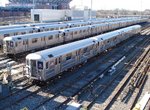 Image 59072 (235k, 1037x778) Photo by: Michael Hodurski Location: Corona Yard | 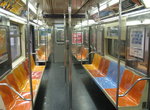 Image 82498 (160k, 820x620) Photo by: Gary Chatterton |  Image 114700 (117k, 800x600) Photo by: Bill E. Location: Queensborough Plaza |  Image 131352 (269k, 1024x687) Photo by: Wilfredo Castillo Location: Junius Street |  Image 134003 (352k, 1024x665) Photo by: John Dooley Location: Sutter Avenue/Rutland Road |
Car Notes
| Green | Preserved, saved for preservation, or exists in some state |
Yellow | Converted to work service (and later scrapped or still in use) |
Red | Wrecked/Damaged in accident (and possibly repaired), or scrapped prior to the bulk of the type |
| Number | Notes | |||||
|---|---|---|---|---|---|---|
| 1369, 1370 | Involved in rear end collision at Fordham Road on 10/25/2000. 1370, the lead car of the moving train, has end nose damage. 1369 was second car in the moving train and is probably a total loss due to structural failure at center of car. 1366 and 1370 of this set sent to FDNY training school at Randall's Island.
| |||||
| 1391 | Firebombed, 12/21/1994. Interior repaired, returned to service. | |||||
| 1391-1400 | Accident on 239th Street Yard lead on 2/3/1998. All cars suffered damage to anticlimbers; all cars had anticlimbers replaced and were returned to service. (1391 is one very unlucky car.) | |||||
| 1435, 1436-1440 | 1436-1440 were the lead set of cars involved in the Union Square wreck of 8/28/1991. 1440 derailed, hit pillar, left with huge gash in side. 1439 sustained end, roof, and side damage. 1437 hit pillar and split in two. 1435, the 6th car in the train, also damaged. 1435, 1436, 1437, 1439, 1440 scrapped. 1438 is now in the series 1431-2-3-4-8.
| |||||
| 1624 | Accident on Grand Central Shuttle, 2/3/1988. Repaired and returned to service. | |||||
| 1687 | Damaged while still at Bombardier factory, repaired and delivered last. | |||||
| 1716, 1909 | Derailed south of Hunts Point Avenue on Track M, 11/24/1996. 1716 repaired and returned to service. 1909 was a total writeoff due to mid-carbody damage.
| |||||
| 2176-2180, 2414-15, 2271-75 | Derailment at 96th Street (West Side) on 1/4/2024. Cars 2176, 2180, 2414-15, and 2275 all sustained heavy damage as a result. A northbound 1 train rear-ended a stopped train that was out of service due to emergency brake vandalism at 96th Street.
| |||||
| 2256 | In collision with revenue collection train at 103rd St., March 1989. Repaired and returned to service. |


MDBF Data
| ||||||||||||||||||||||